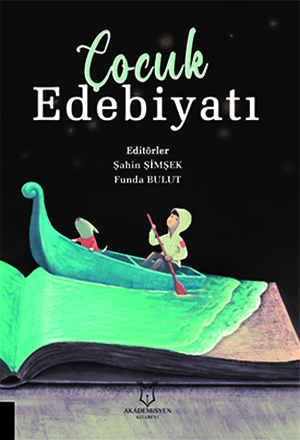



Children’s Literature And Popularity: A Theoretical And Critical Discussion
This study examines the relationship
between children’s literature and popular literature within a theoretical and
critical framework, moving beyond the reductive view that popularity is opposed
to literary value. While popular literature is characterized by accessibility,
fluency, and broad appeal, children’s literature offers a more complex,
multilayered structure that incorporates aesthetic, pedagogical, and
developmental dimensions. There are clear points of intersection between the
two fields in terms of language, narration, and plot. In particular, accessible
language, action-oriented narratives, and a focus on reader engagement
reinforce these similarities. Nevertheless, children’s literature follows a
distinct trajectory shaped by the principles of “child appropriateness” and
“child reality.” While the formulaic structure, logic of mass production, and
rapid-consumption orientation of popular literature are notable, these features
also tend to reproduce dominant ideology, further differentiating the two
fields. At the same time, popular texts play a functional role in fostering
reading motivation, enhancing reader engagement, and cultivating reading habits
among children. This study approaches the relationship between children’s
literature and popularity not only through oppositions but also by considering
points of intersection, divergence, and transformation, thereby offering a
holistic perspective on the literature. In this context, popularity is viewed
not merely as a limiting factor but as a functional tool that supports
children’s participation in reading and facilitates their transition to more
sophisticated texts.
Bu kitabın bölümleri bulunmamaktadır.
Atıf Sayısı :